You know silos can boost topical authority. But the moment you start planning one for a real niche, the questions hit fast.
How many articles per silo? What if your topics naturally overlap? Can you nest silos within silos? Does content type matter: People Also Ask posts vs. long-form guides?
The concept is clean in theory, but in practice, it gets complicated. SEO siloing either works cleanly, connecting visitors to tightly relevant, supporting content or creates problems that are hard to untangle later.
But before restructuring anything, the real question is whether a silo strategy is the right move for your site at all; and if it is, how to build one that satisfies both crawlers and the people they send your way. That’s exactly what this article covers.
TL;DR
- SEO Silo structures your website into separate, topic‑focused sections. Each section has a main pillar page supported by closely related subpages and all pages link only within their own silo, not to other ones.
- Core benefits: stronger topical authority, cleaner crawl paths, more efficient PageRank distribution and a scalable keyword architecture that prevents cannibalization.
- Auditing your site before building silos is essential: duplicate content, orphaned pages and equity leaks can quietly undermine even a well-planned structure.
- Combining crawl data, log files and GSC metrics exposes how Googlebot actually navigates your silos, which pages are being missed and where internal link equity is draining to low-value URLs.
- A practical breakdown of how to implement SEO silo correctly: define physical or virtual silo types, map pillar-and-cluster pages to unique keyword intents, enforce controlled internal linking patterns and keep URL structures shallow and topically aligned.
Bottom line: SEO silo is a high-impact architecture strategy, but only when it’s data-validated. The difference between silos that rank and ones that stagnate is visibility into crawl behavior, equity flow and duplication, plus the right tooling to act on it.
What’s an SEO Silo Structure?
SEO silo is a deliberate, architecture‑driven approach to organize your website’s content into tightly focused, self‑contained topic groups. Each group (known as a silo) includes a core pillar page supported by a network of related subpages. These pages interlink vertically and laterally within the silo, but don’t link out to other silos, keeping the topical integrity of each section.
This isolation is the defining feature of SEO silo. You prevent cross‑silo linking, thus creating clean, authoritative content ecosystems that signal to search engines exactly what each section of your site is about. You create a structure that’s easier for crawlers to understand, index and rank.
Here’s an example of how a digital marketing agency would divide its site into three isolated silos.
- The SEO silo has a pillar page on SEO Services, backed by subpages on Technical SEO, On-Page SEO and Link Building.
- The PPC silo does the same for PPC Advertising, with subpages covering Google Ads, Meta Ads and Retargeting.
- The Content Marketing silo handles Blog Strategy, Content Calendar and Email Marketing.
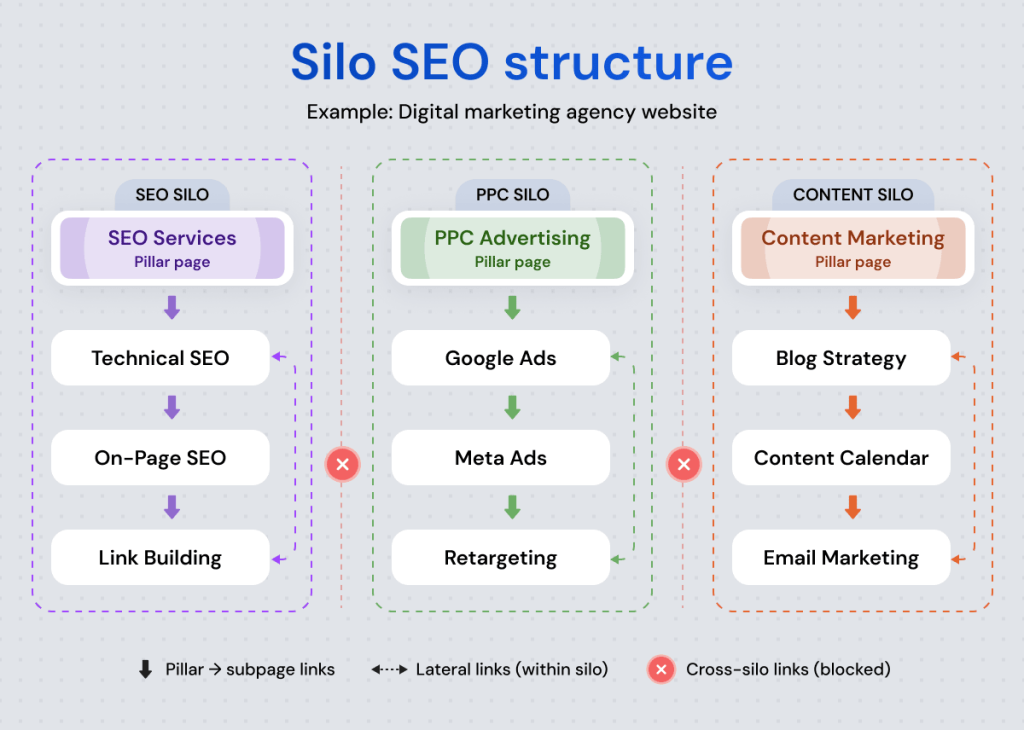
The basic rule is this: a Link Building page never links to a Google Ads page. The silos are hermetically sealed. Search engines read each one as a self-contained authority on a single topic – what the agency would want for topical relevance signals.
Why Do Silos Work in SEO?
SEO siloing works because it brings order, clarity and authority to large websites – key elements that both users and search engines reward. Technically, a silo structure transforms sprawling content into clean, topic‑driven ecosystems that are easy to crawl and navigate and strategically built to strengthen rankings across an entire domain.
It’s technical SEO, information architecture and authority building work together, leading to these benefits:
1. Create a Crawl-Efficient Site Structure
A silo changes how Googlebot moves through your site as your internal link graph becomes directional and intentional. Crawlers follow internal links, so a clear vertical hierarchy (pillar → subpages) combined with lateral links between subpages means every URL in a silo is only a few hops away from the pillar.
This eliminates orphaned pages, dead‑end clusters and unnecessary topic‑hopping that forces crawlers to switch context between unrelated subjects.
But if you want to know how Googlebot actually behaves inside a silo, a platform like JetOctopus closes that gap.
Crawling at up to 250 pages/second, JetOctopus captures page depth, internal link structure and bot behavior across your entire site, making crawl budget waste immediately visible.
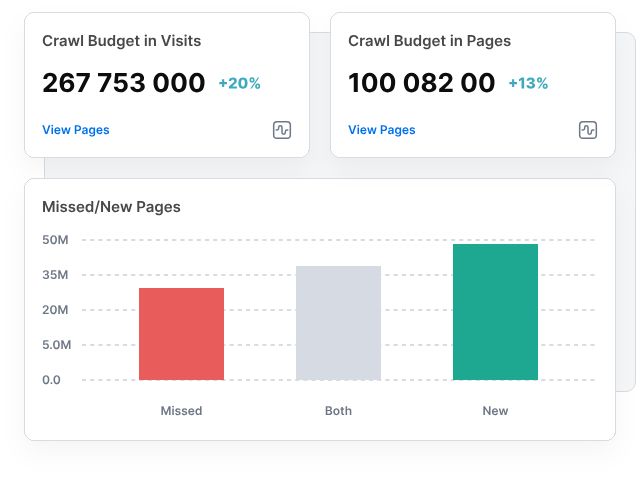
- Its log file integration shows you exactly which pages real bots are hitting and how often.
- Orphan page detection confirms whether your silo structure is truly airtight.
- It allows you to compare up to 10 crawls simultaneously and can track how structural changes (like adding pillar pages or tightening internal links) directly affect crawl frequency and indexation over time.
- While the Links module in JetOctopus exposes how internal linking is built on your site and shows which URLs are under‑linked, the AI Internal Linker helps you rebalance internal linking for stronger crawling by search and AI bots and tune a more efficient PageRank flow.
2. Improve Navigation and User Experience (If the Architecture Matches User Intent)
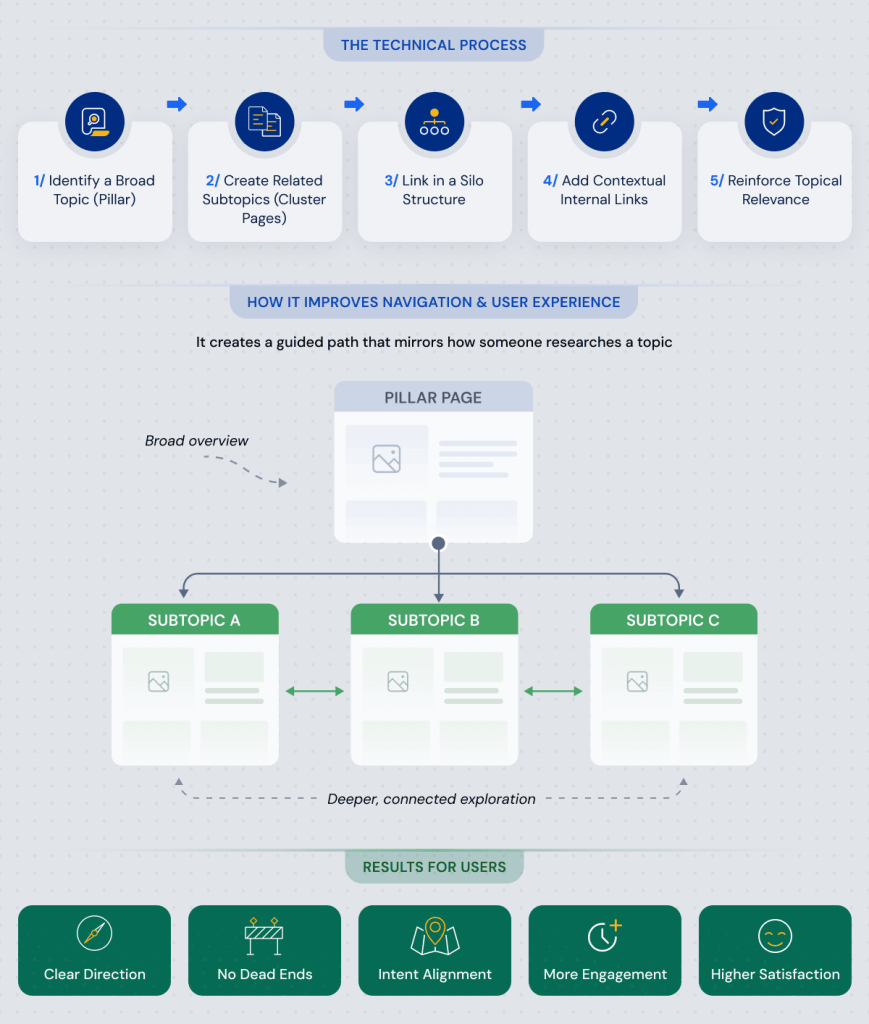
A silo improves engagement when the topic grouping matches how users actually think about a subject.
Users land on a broad pillar page, find the specific angle they’re after and follow lateral links to adjacent subpages. That translates into effective, intuitive navigation and positive behavioral signals: session depth, pages per visit and return visits.
Over time, this reduces the likelihood of Googlebot treating those pages as low-quality or redundant.
3. Build Deep Topical Authority that Expands Over Time
Topical authority is now one of the strongest ranking drivers.
As you expand a silo with high‑quality, E‑E‑A‑T‑aligned content, you strengthen the entire category. The pillar says “this site covers this topic.” The subpages say “this site has explored every angle of this topic.” That combination is what moves a domain from appearing in queries to appearing consistently and prominently in them.
Here’s how NerdWallet approaches personal finance content. Their “Personal Loans” silo doesn’t launch fully formed; it builds authority progressively.
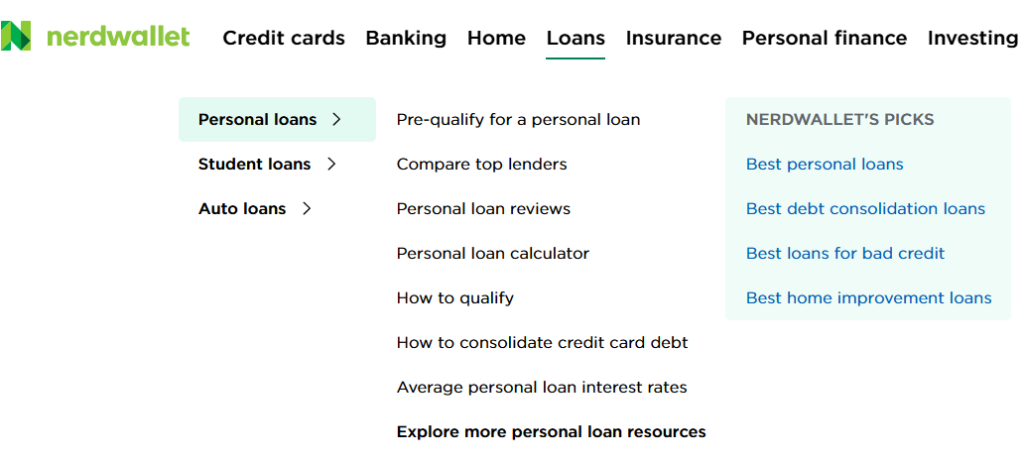
It starts with a high-volume pillar like “Best Personal Loans,” then expands outward with cluster pages targeting increasingly specific intent: “Pre-qualify for a personal loan,” “Compare top lenders,” “Personal loan calculator” and “Personal loan reviews”, etc.
4. Supercharge Internal Linking and PageRank Flow
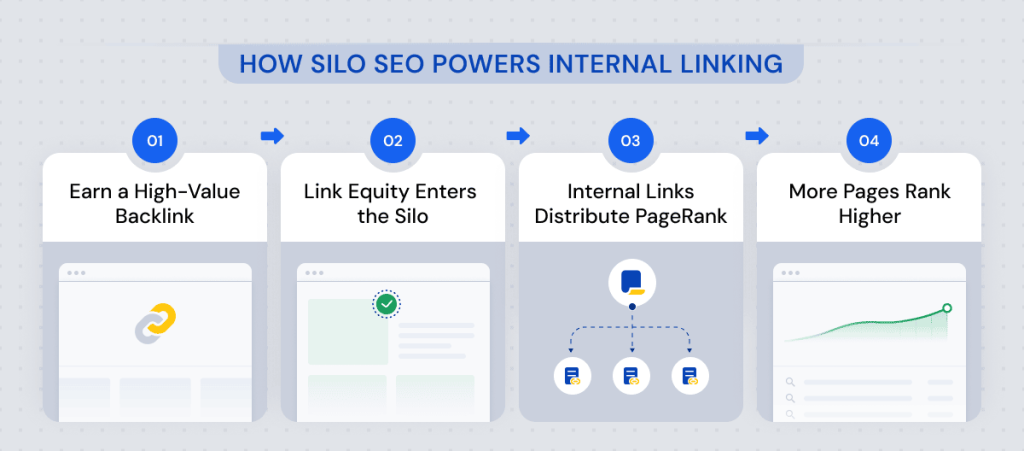
Internal linking is the mechanism through which link equity moves around your site. When an external site links to one of your subpages, that page receives a PageRank boost.
Thus, link building works even better when a site is organized into silos because PageRank (aka link juice) is spread across all pages in a silo. The silo structure handles the distribution, increasing the value of each external link built for the whole silo. So when you build links to individual pages, they boost all pages in a silo.
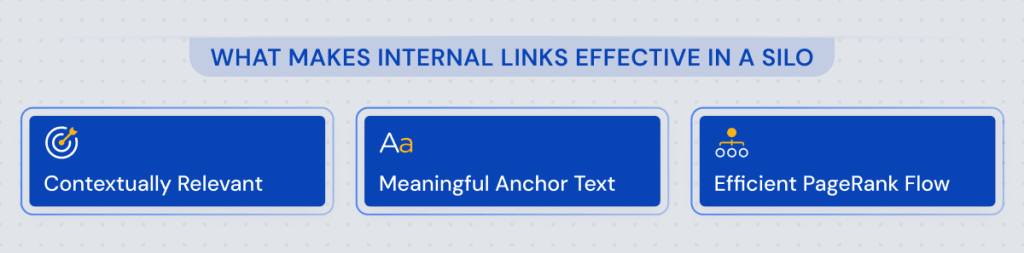
5. Future‑Proof Keyword Expansion
Most keyword cannibalization issues are architecture problems in disguise. When a site isn’t siloed, the same broad topic gets addressed partially across multiple pages: a homepage mentions it, a blog post explores it, a services page targets it. Google struggles to decide which URL to rank for which query.
A silo structure solves this by assigning clear ownership of a topic to a single cluster and making the keyword strategy scalable. You can:
- Identify gaps instantly
- Expand into new subtopics without cannibalization
- Use pillar pages as seed keywords for deeper research
This structure keeps your content roadmap organized and prevents overlap.
How to Build and Audit Effective SEO Silos
Define Your Silo Architecture
Map each silo around a single core topic, with one Pillar Page targeting a broad, high-volume keyword and the rest of the Supporting Pages targeting semantically related subtopics beneath it. This setup helps Google see you as the go‑to source on the topic.
How you implement that structure, however, comes down to two distinct approaches.
Physical vs Virtual Silo
| Type | Functionality | Benefits | Best For |
|---|---|---|---|
| Physical Silo | Enforces the structure at the URL level Supporting pages live inside the pillar’s directory (/topic/subtopic/) | The hierarchy is baked into the architecture itself, making it a stronger signal for crawlers Both users and crawlers instantly understand the topical relationship | New builds or sites with clean taxonomy |
| Virtual Silo | Deliberate, closed-loop internal linking: every supporting page links to the pillar page and to its sibling pages, forming a tightly connected cluster. | Focus on topical relevance Keeps unrelated themes from diluting each other | Large, established sites |
For both types, enforce strict silo isolation: cross-silo linking disperses topical relevance and dilutes the authority you’re deliberately consolidating. The only exception is a deliberate, editorially justified contextual link between related silos.
Some companies choose the hybrid version as follows: physical silos for core service and category pages, virtual silos for blog and legacy content. The key idea in this case is that links carry the weight and the URLs amplify the signal.
You should also remove keyword cannibalization between silos at this stage; each page should own a unique keyword intent before a single word of content is written.
Cannibalization issues may appear after each Google algorithm update because Google may re-evaluate the way semantic clusters are assessed. With JetOctopus, you’ll have a duplication report giving you a precise, crawl-based audit of exactly where overlap is occurring:
- duplicate titles
- matching meta descriptions
- low unique word ratios in H1s and H2s
- full HTML duplication where both content and code are identical across URLs
- and cannibalization issues
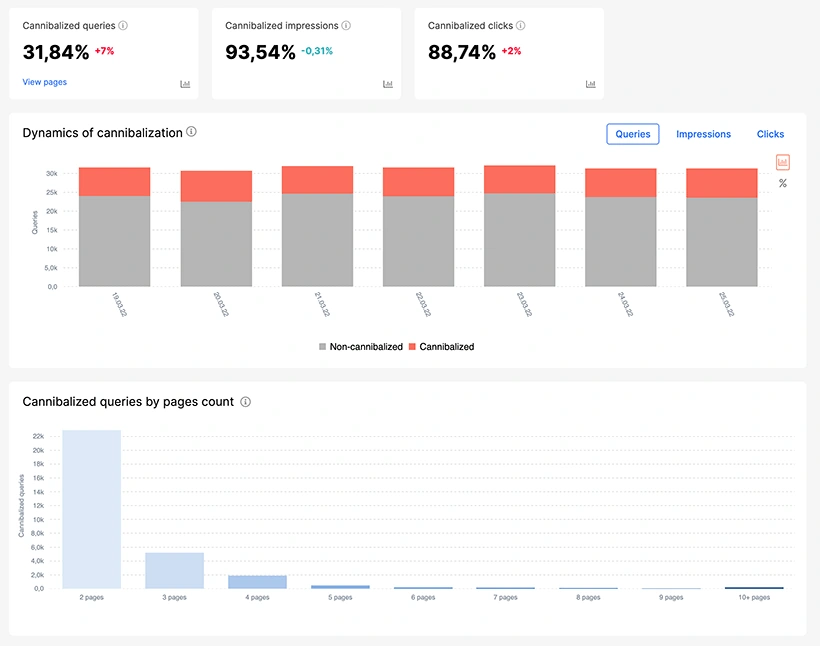
Each issue links directly to a URL-level data table, so remediation is targeted. For large sites with deep content libraries, running this audit before finalizing silo boundaries helps you build a clean architecture instead of having one undermined by legacy duplication from day one.
Create Pillar-and-Cluster Pages
As the authoritative hub for an entire silo, a pillar page targets a broad, high-volume head keyword and covers the topic comprehensively enough to satisfy both the crawler’s understanding and top-of-funnel search intent. Most importantly, the pillar page shouldn’t cannibalize the cluster pages beneath it.
Take a site like Garage Gym Reviews, which covers home fitness equipment in depth. The “Equipment” pillar page targets the broad head keyword and links downward to several cluster pages, like: “Apparel,” “Strength equipment,” “Conditioning,” “Bodyweight” and others.
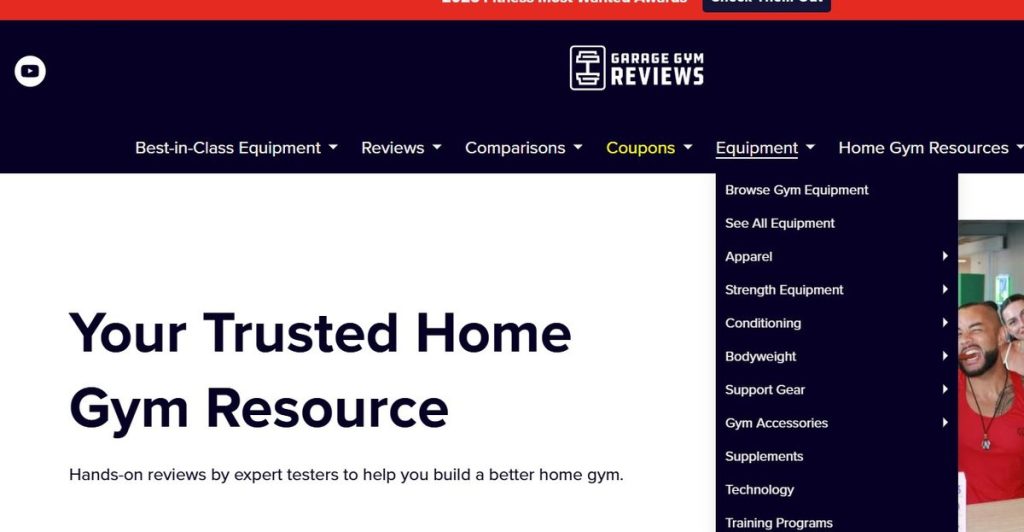
The tighter the topical fit between pillar and clusters, the stronger the authority signal Google receives for the entire silo.
On the other hand, cluster pages are your long-tail, high-intent assets. Each one targets a specific subtopic keyword, goes deep on a single theme and avoids drifting into territory owned by a sibling cluster or the pillar itself.
Every cluster page has two internal linking responsibilities: one back to the pillar (reinforcing its topical authority) and contextual links to relevant sibling clusters when it genuinely adds value.
Implement Internal Linking Patterns
A website silo structure only works when its internal linking is engineered with precision. Google representatives reinforce this: the fewer clicks from the homepage to a page, the more important that page appears.
Flat architectures keep everything close to the homepage, but they blur priority. A siloed hierarchy does the opposite: it clarifies which pages matter most.
At the top sits your pillar page, linking to every supporting page in its cluster. Each supporting page links back to the pillar and to two or three contextually related pages within the same silo. This creates a controlled, pyramid‑style flow of authority that prevents important URLs from being buried and keeps every page within three clicks of the homepage.
Cross‑silo links should be rare and strictly contextual, useful when content actually overlaps, not as a shortcut.
Once you design your internal linking patterns, you’ll need to validate that they’re working as intended. For large enterprise companies specifically, internal linking generates enough complexity that equity leaks and orphaned pages are easy to miss without dedicated tooling.
With its Linking Explorer and Links Overview, JetOctopus makes it easy by giving you full datatable visibility into each page’s inlinks, anchor text, nofollows, broken links and bot visit patterns. Structure efficiency visualizations reveal where authority is draining to low-value pages instead of flowing to your priority URLs.
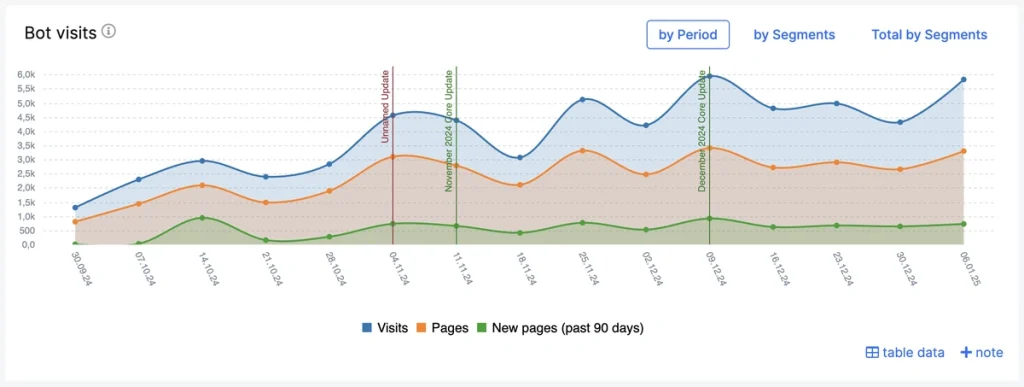
The AI Internal Linker goes further: cross-referencing crawl data, log files and GSC metrics to identify under-linked pages with organic potential and high-authority donors sitting on unused equity, then generating contextually matched link and anchor suggestions with zero page speed impact.
Find out more about JetOctopus’ internal linker:
Optimize the URL Structure
Subdirectories are the most reliable way to keep authority consolidated under one domain and make your silos machine‑readable. They create a clean, unified architecture that signals topical relationships with precision.
Your URLs should mirror your silo structure:
/silo-category/ → pillar page
/silo-category/subtopic/ → cluster page
This structure helps crawlers understand how content is grouped and ensures users always know where they are. Keep URLs short, descriptive and hyphen‑separated and try not to go too deep. If you’re hitting four levels of nesting like /category/subcategory/sub-subcategory/page, it’s probably time to simplify, as this wastes crawl budget and could bury important pages.
A strong silo URL structure follows three principles:
- Keep everything under one domain using logical subfolders
- Limit depth to three levels to maintain crawl efficiency
- Match the URL structure with the topical hierarchy
In this case, a topic cluster model with controlled but unrestricted cross-linking would outperform a siloed architecture every time.
Conclusion: Turn SEO Silo Architecture Into a Ranking Advantage
Silo SEO is a powerful strategy, as long as it’s the right fit for your site and executed with precision. This approach consolidates topical authority, simplifies crawl efficiency and creates a scalable architecture that gradually evolves.
Yet, knowing your silos are structurally sound requires more than good intentions; it requires visibility into how crawlers actually behave, where link equity is flowing and whether duplicate content is undermining your architecture before it’s even live.
That’s where JetOctopus earns its place in the process. From crawl budget analysis and orphan page detection to duplication audits and AI-powered internal linking suggestions, it gives you the crawl-level intelligence needed to build silos that perform, not just ones that look correct on a diagram.