SEO for AI Search in 2026: Technical & Content Strategies That Actually Work

Think Search 2025: Key Takeaways from the AI-Driven Search Era
17 November, JetOctopus and OMcollective gathered the SEO community in Ghent to answer one question:
How is AI reshaping search and what must SEOs do to stay visible in 2025 and beyond?
Across multiple expert sessions, one insight became clear:
Search is no longer Google-only and AI has fundamentally changed how content is discovered.
Below are the 7 most important takeaways, each tied to the slides from the event deck.
1. Search is now truly multichannel – Google is just one of many entry points
Key points:
- Discovery no longer starts exclusively on Google.
- Users choose platforms that match their format and intent.
- Social platforms and AI assistants now act as primary entry points.
The days when every search journey started with Google are over. People increasingly begin their discovery on platforms that match their intent, habits and preferred content format:
- TikTok
- YouTube
- AI chatbots like ChatGPT, Claude, Perplexity
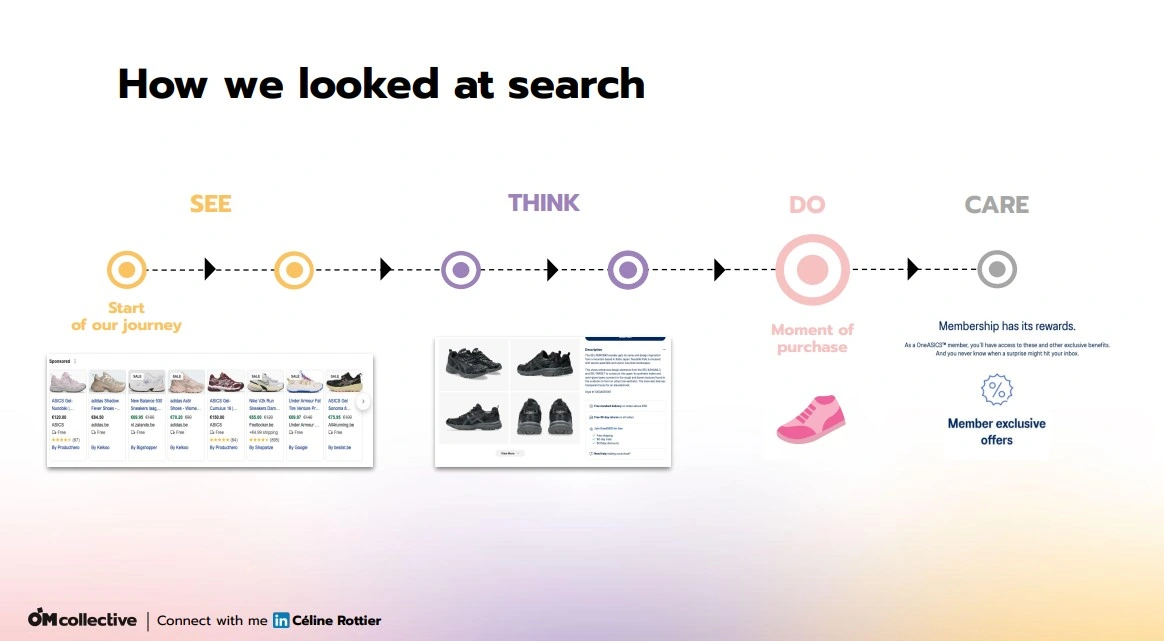
These platforms now act as primary entry points, not supporting channels.
For younger audiences in particular, TikTok and Reddit often outperform Google as the very first place where they seek answers.
Why this shift is happening:
- Users expect visual, fast and conversational results.
- AI tools provide direct answers, not links – reducing Google’s role as a gateway.
- Social platforms have become search engines of their own, with deep intent signals and strong personalization.
- People trust community-driven platforms more for reviews and “real experience”.
What this means for brands:
- Google is no longer the default starting point and often not the strongest one.
- Brands must optimize for discoverability across multiple surfaces, not only SERPs.
- Content must exist in multiple formats:
- short-form video
- carousels
- Q&A structure
- conversational answers for AI systems
- AI bots now influence which content gets surfaced, making crawlability and page structure even more important than before.
In short:
To stay visible, brands must build a cross-channel discovery strategy, not just chase blue links.
2. AI hasn’t replaced search, but it has reshaped it
AI is changing how people search – but not the underlying foundations.
Every major AI system still depends on crawlable, indexable, well-structured content sourced from Google’s index.
Key points:
- AI pulls answers from pages that are indexed, fast, and technically clean.
- If Google can’t crawl or interpret a page, AI tools won’t surface it either. Freshness, clarity, E-E-A-T and strong semantic structure strongly influence whether AI selects your content.
- AI builds “answer graphs” from real websites – meaning your content must be structured and machine-readable.
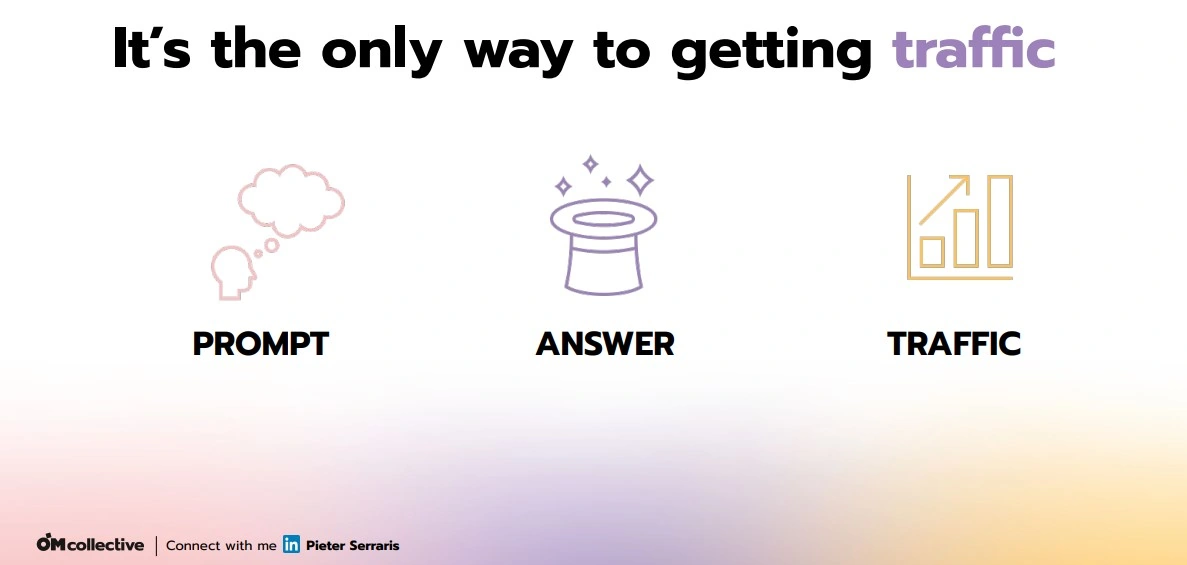
AI visibility begins with Google visibility.
Ranking well in Google has become the entry ticket to appearing in AI answers.
In short:
AI is reshaping discovery, but strong SEO remains the foundation.
No crawl → no index → no AI visibility.
3. Log files are now the only reliable source of truth about how AI bots discover content
Search is no longer driven only by Googlebot.
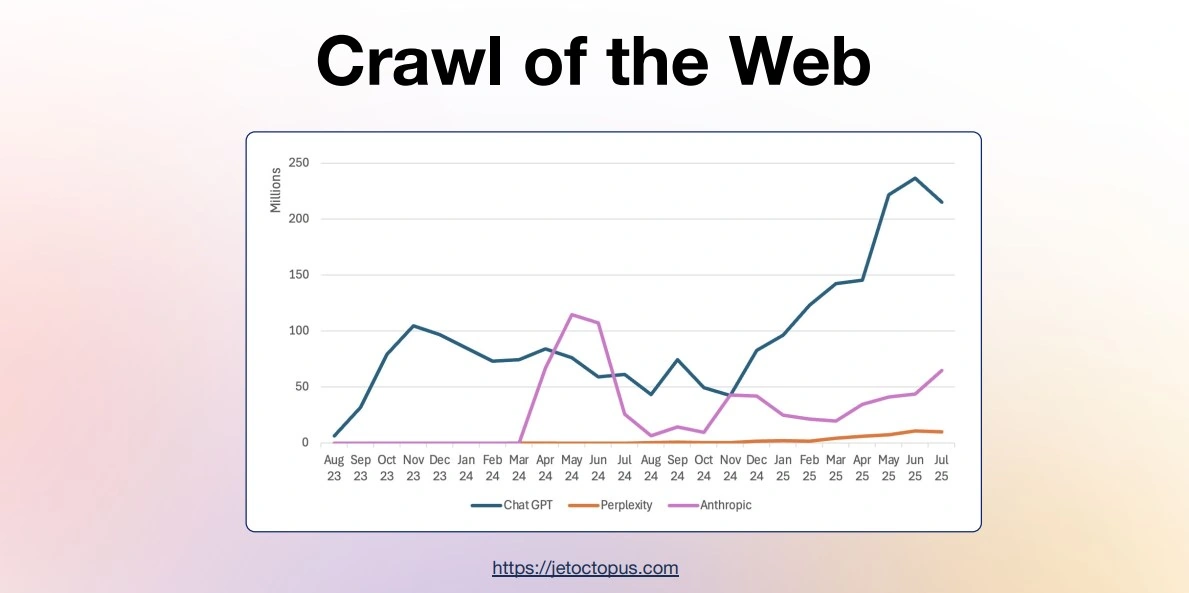
AI crawlers (ChatGPT bots, Claude bots, RAG bots, etc.) now crawl websites with completely different patterns and server logs are the only place where these behaviors can be seen.
Without logs, you’re blind to how AI systems interact with your content.
Key points:
- AI bots crawl differently from Googlebot with unique patterns, priorities, and entry points.
- RAG bots revisit pages to evaluate content quality, not just to discover links.
- User-type bots (like ChatGPT-User) behave like human browsing sessions and surface only certain content.
- Crawl waste is exploding – thousands of pages receive AI hits that bring zero value.
- Logs are the only place where AI crawl, errors and rendering failures can be detected.
What this means for brands:
- Crawl budget must now be monitored not only for Google, but for AI systems consuming server resources.
- You cannot optimize for AI visibility if you don’t know how AI bots crawl your site.
- Traditional SEO tools don’t detect AI bot behavior – logs are the only source.
- Sites with poor structure or rendering issues risk being ignored by AI systems.
- Crawl budget must now be monitored not only for Google, but for AI systems consuming server resources.
In short:
AI discovery is a black box – and log files are the only way to open it.
No logs → no crawl understanding → no AI visibility → no chance to appear in answers.
4. Internal linking has become a top-tier growth engine
In the AI-driven search landscape, it has become a strategic ranking engine that influences how both Google and AI systems understand your content, its depth, and its relationships.
Іnternal links directly shape how fast content gets indexed and how strongly AI models interpret topics.
Key points:
- Indexing speed is now heavily influenced by strong internal linking
- Semantic clustering helps AI understand topical depth and relationships
- Internal linking determines which pages gain or lose visibility across both search and AI answers
- AI relies on structural signals, and internal linking is one of the clearest structural indicators
Modern internal linking now means:
- Donor → Acceptor logic instead of simply “adding links”
- Embedding-based similarity, which aligns linking structure with semantic meaning
- Automated internal linking layers, replacing manual linking on page-by-page basis
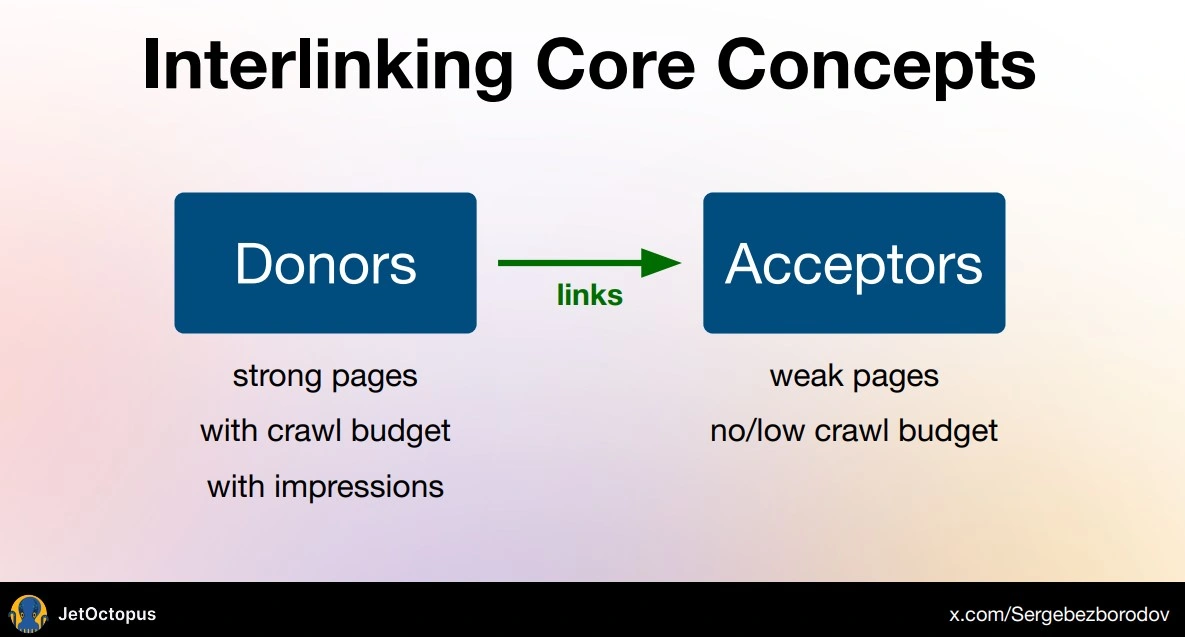
This makes IL one of the few scalable levers that can meaningfully increase visibility for large websites.
Is short:
Internal linking is now a growth engine – not a maintenance task.
Stronger internal structure → faster indexing → better understanding by AI → higher visibility.
5. To rank in AI, your content must function as an answer engine
AI reads content differently than Google. Large language models evaluate relevance within the first seconds and within the first sentences.
Key points:
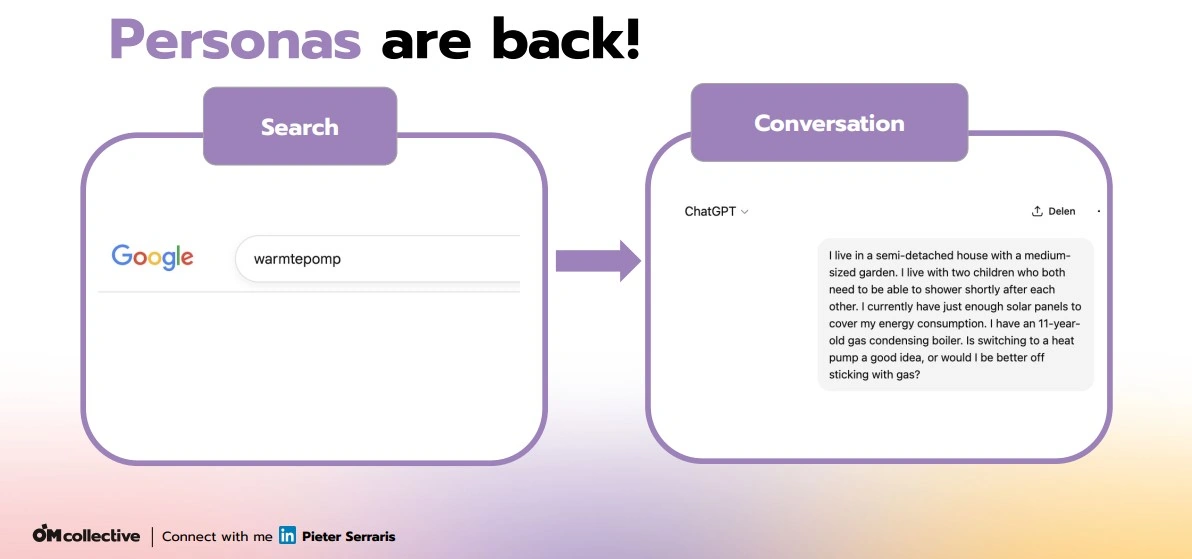
- AI uses “fan-out” logic – one query triggers multiple follow-up questions
- LLMs scan only the first ~100 words to understand relevance
- Short, direct answers outperform long introductions
How to appear in AI answers:
- Start with a clear, concrete answer
- Add logical follow-up Q&A below
- Use tables, visuals, lists, examples – multimodal content is easier for AI to parse
- Demonstrate trust, expertise, clarity
- This structure helps both AI systems and human users extract value instantly
In short:
To rank in AI outputs, lead with the answer, then expand – not the other way around.
6. Technical SEO matters more than ever
In the AI era, bots rely even more on clean structure, fast rendering, and accessible HTML. If your site breaks technically, both Google and AI systems lose visibility into your content.
Key points:
- Server-side rendering (SSR) boosts crawlability for both Googlebot and AI bots
- Slow rendering breaks visibility – pages loading too long often fail to render fully
- JavaScript can hide content from AI systems, causing missing or incomplete indexing
- Technical regressions directly impact crawl behavior, sometimes instantly
What this means for brands:
- Rendering must be stable and predictable across all templates
- JS-heavy pages need monitoring to ensure content isn’t lost for AI systems
- Performance issues now translate into visibility losses, not just UX issues
- Technical SEO is no longer a background task – it’s the foundation of AI visibility
In short:
To rank in AI outputs, lead with the answer, then expand – not the other way around.
7. Measurement must evolve beyond traffic & clicks
Traffic and clicks no longer reflect real visibility.
AI surfaces content without sending users to websites, and discovery now happens across multiple platforms.
Key points:
1. Discoverability. Metrics that show whether your brand is seen at all:
- AI citations
- Saves, pins
- Mentions & shares
- Zero-click visibility
2. Engagement. Signals that show interaction:
- Comments
- Upvotes
- Video engagement
3. Authority. What builds trust for both Google & AI:
- Brand demand
- Off-site mentions
- External trust signals
4. AI Visibility. What AI bots actually do:
- Crawl patterns
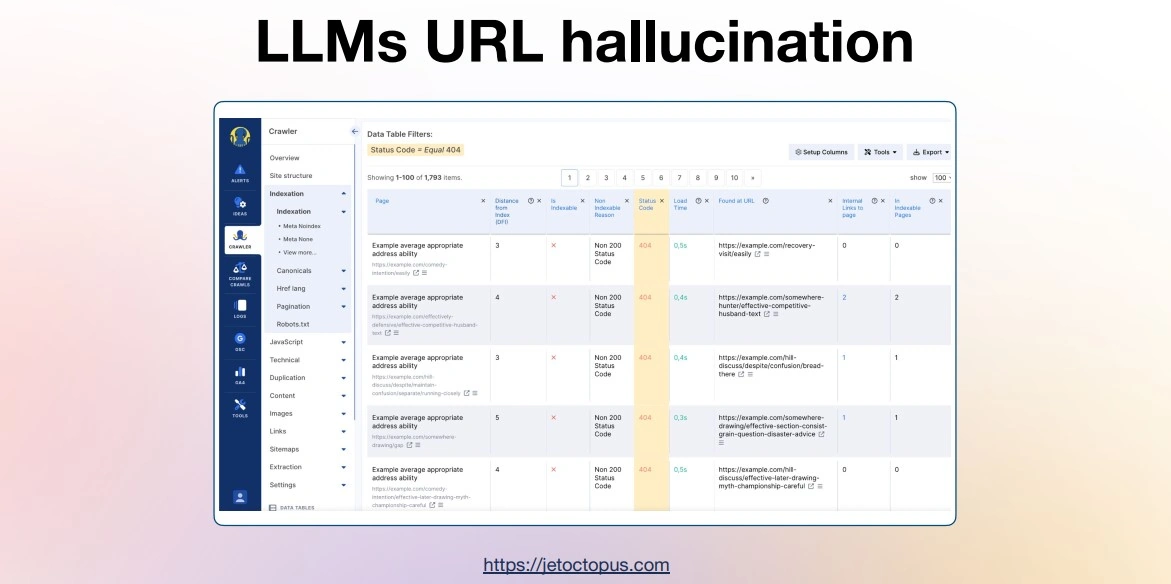
- Hallucinated URLs
- RAG bot hits
In short:
Modern measurement = discoverability + engagement + authority + AI visibility.
Clicks alone no longer show your true reach.
Conclusion
Think Search 2025 made one thing clear: AI is reshaping discovery, but strong fundamentals still determine who wins visibility. Success now depends on clean structure, fast rendering, clear intent signals and a deep understanding of how AI systems interpret and surface content. Brands that invest in technical quality, structured answers, and continuous monitoring through log files will stay visible across all channels – not only in Google, but also in AI-powered assistants and emerging discovery platforms.
SEO is becoming more dynamic and more layered, but with the right strategy and the right tools, it’s also becoming a bigger opportunity than ever.
Want to see how your website looks through the eyes of AI?
Discover how AI bots actually crawl, interpret and surface your content and what you can do to stay visible.

About Stanislav Dashevskyi
Stan is a long-time JetOctopus user and currently is the Head of Customer Success (SEO) of JetOctopus. SEO analyst since 2013, SEO tutor and Tech SEO enthusiast. You can find Stan on LinkedIn.