When Googlebot and AI bots spend crawl budget on your login pages, filtered duplicates and dead 404s, they’re not spending that time on the pages that actually matter. On large, frequently updated sites, that wasted crawl activity translates directly into slower indexation, stale SERP snippets and lost visibility on pages that should be driving revenue.
Still, fixing it rarely requires exotic technical work. Removing low-value pages, cleaning up duplicates, tightening internal linking and speeding up your server go further than most teams expect.
This crawl budget optimization guide walks you through every step, with JetOctopus helping you diagnose issues and apply the right fixes along the way.
TL;DR
- Crawl budget optimization matters most for enterprise sites, ecommerce catalogs and large publishers.
- XML sitemap hygiene, canonical tag consistency and clean internal linking are the foundational elements that keep Googlebot and AI crawlers focused on revenue-critical pages.
- Duplicate content from URL parameters, faceted navigation and taxonomy spends crawling across near-identical URLs.
- Redirect chains, broken links and orphan pages quietly burn crawl cycles on dead ends that never convert into indexation.
- Robots.txt now has to govern both search and AI crawlers from a single conflict-free configuration.
- JetOctopus unifies crawl data, log analysis and GSC signals across sitemaps, canonicals, redirects, robots.txt, Core Web Vitals, orphan pages and internal linking, turning fragmented technical audits and SEO performance into one operational view for diagnosing and fixing crawl waste.
Diagnose Before You Optimize
Before applying any crawl budget optimization tips, you need to know where to look.
- Log files show what Googlebot and AI bots actually crawled. And keep in mind that AI bots’ crawl patterns are worth tracking separately from traditional search engine crawlers.
- Crawl data shows your site’s real technical health: orphan pages, broken links, canonical conflicts.
- GSC shows what Google ranks and which query fan-outs your site is visible for.
The real signal lives in the gaps between these three sources: URLs Googlebot (or an AI crawler) hits hard in logs but that don’t rank at all or pages the website crawl labels as “healthy” that Googlebot doesn’t crawl and GSC still won’t show. That gap-finding is one of the crawl budget best practices for large sites that’s easiest to skip.
When Do You Need to Optimize Your Crawl Budget?
Crawl budget optimization becomes essential when a site’s scale, update frequency or technical debt outpaces Googlebot’s and AI bots’ ability to crawl efficiently. That includes:
- Enterprise environments with millions of URLs, daily content changes or complex faceted navigation
- Large eCommerce catalogs that have thousands of SKUs with seasonal turnovers
- High‑velocity news publishers (think dozens of new articles a day)
Small, simple sites rarely, if ever, need aggressive crawl budget management. But for medium and large properties, optimizing it has a good impact on the site’s architecture, accelerates re‑crawling and directs Googlebot and AI crawlers toward the content that drives business impact.
Here’s what John Muller from Google says related to this:
8 Essential Strategies for Crawl Budget Optimization
| Step | What it fixes | Watch out for |
|---|---|---|
| Robots.txt setup | Blocks AJAX requests and AI bots. | Don’t block pages from search bots. |
| XML sitemap hygiene | Curates the exact URL inventory crawlers should prioritize | Non-200/non-indexable URLs left in; sitemap files exceeding ~50K URLs; sitemap vs. robots.txt conflicts |
| Canonicals | Is no longer a way to close pages from indexation or crawling | Non-canonical pages still tend to rank |
| URL parameters in GSC | Stops sorting/tracking/filter parameters from crawling by Googlebot | Replace internal links with buttons leading to such page types |
| Redirects & broken links | Removes wasted round trips and dead-end requests | Redirect chains (multi-hop) and soft 404s (thin content pages with duplicated content) |
| Orphan page management | Surfaces pages sitting outside the link graph | Treating “delete all orphans” as the default instead of triaging (404/410 vs. redirect vs. reintegrate) |
| Internal linking structure | Eliminates website structure blind spots and shortens the crawl depth | Pages under ~10 unique internal links from indexable pages; internal nofollow links cutting off equity; excessive crawl depth |
| Site speed and servers reliability | Increases the number of URLs crawlers can process per day/month | High 5xx error rates make the search bot crawl less; long TTFB is also one of the factors limiting the crawling |
1. Set Up Robots.txt to Block Low-Priority Pages
Configuring robots.txt file to block low‑priority pages is a tactic SEO teams rely on, especially in large ecommerce architectures where URL bloat is inevitable.
Robots.txt lets you proactively remove entire low‑value URL spaces from crawler consideration: admin paths, cart/checkout flows, internal search, staging environments and parameter‑driven noise. This way, bots don’t waste crawl cycles on pages that will never contribute to indexation or revenue.
Getting this right takes more than writing a few Disallow lines, though. A single sloppy wildcard can wipe out an entire category tree without you noticing, so it’s worth double‑checking your robots.txt before you rely on it. Load the file, test the rules and run a few key URLs through a validator.
This validation now extends past traditional search engines like Google. With AI crawlers increasingly hitting ecommerce sites, robots.txt has to govern search and AI bot behavior from one conflict-free configuration.
JetOctopus’s robots.txt multitool handles this validation directly: it flags conflicting directives across user-agents and lets you simulate how individual search engines and AI crawlers will interpret your rules before any change goes live. Basically, it catches a bad Disallow before it ships instead of after it’s suppressed crawl activity on revenue pages.
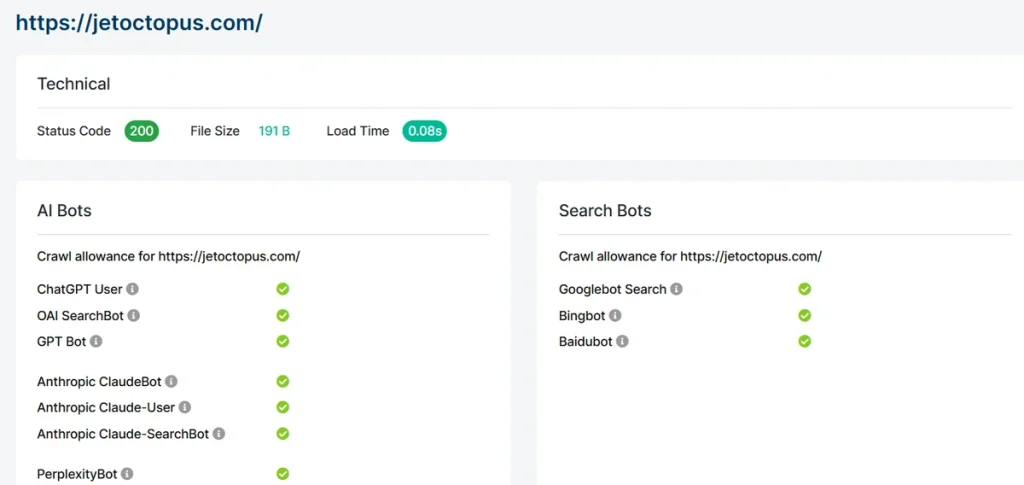
Well‑scoped disallow rules reduce server load, improve crawl efficiency and tighten log signal quality.
Find out more about Robots.txt tool:
2. Improve XML Sitemap
An optimized XML sitemap is an important crawl‑budget control point. It acts as a curated, machine-readable inventory of the URLs that genuinely matter, guiding Google’s crawlers with precision.
Your sitemap should only include canonical, indexable, 200‑status URLs and exclude redirects, noindex pages, thin content and parameter noise. This is a surefire way to remove crawl waste and help Google better understand your site’s true structure. Accurate last‑modified dates help prioritize re-crawling, while sitemap index files keep large enterprise architectures organized by content type.
This is where a structured, recurring sitemap review pays off and the dedicated Sitemaps dashboard in JetOctopus is built to handle exactly this kind of deep, ongoing analysis. Beyond flagging non-200 or non-indexable URLs, JetOctopus:
- shows the average number of URLs per sitemap file (critical since search engines can’t fully process files exceeding roughly 50,000 links)
- breaks down “Sitemap problems by depth” alongside “URL Distribution by depth”
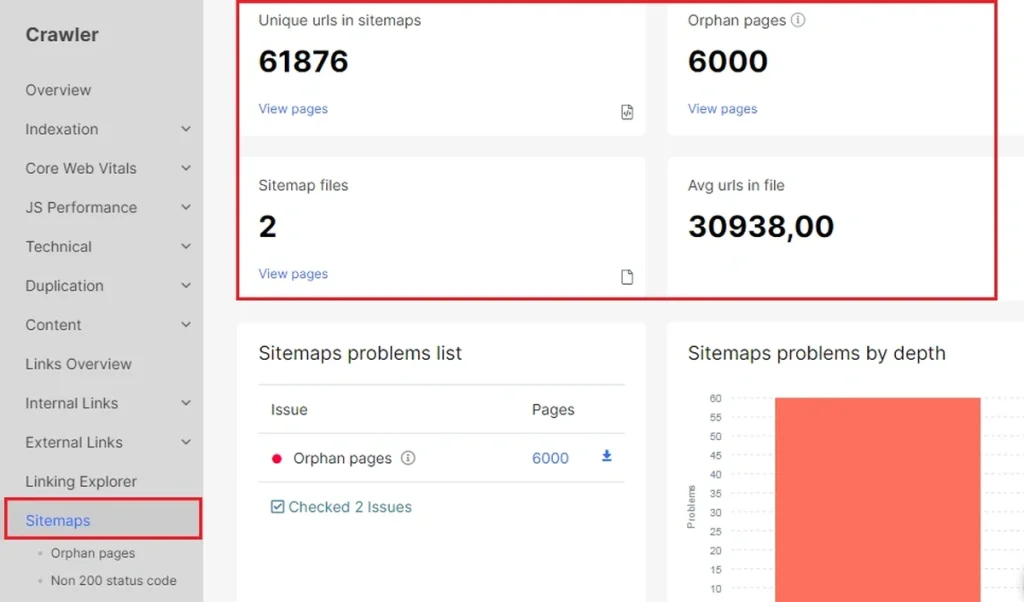
Any gap in that overlap is either crawl budget being spent on pages your sitemap doesn’t know about or sitemap entries pointing to pages your crawl can’t reach, both worth chasing down.
JetOctopus also lets you isolate canonicalized URLs sitting inside your sitemap (pages with a rel=canonical pointing elsewhere).
Once your sitemap is cleaned up, JetOctopus’s sitemap files report lets you verify each file’s status code, error message and last-crawled date in one place and you can push the updated version straight into Google Search Console under Index → Sitemaps to confirm Google can fetch it without errors.
3. Get Rid of Duplicate Content
Advanced, complex sites generate duplication through URL parameters, taxonomy sprawl, internal search endpoints, attachment pages and legacy architecture, all of which fragment crawl demand across multiple near‑identical URLs.
For instance, for an e-commerce website, filter logic can easily explode your URL surface area. When a single category spawns ten parameter‑driven filter combinations that all render near‑identical product listings, you’re effectively burning crawl cycles on listing pages that cannibalize the visibility of your actual product pages.
So, apart from confusing engine crawlers, duplicate content forces bots to reprocess the same HTML, JS and templates instead of hitting priority URLs.
Here’s how you can tackle the issue:
- enforce strict redirect rules across all protocol/host variants
- block internal search pages in robots.txt
- remove attachment pages
- rationalize taxonomies
Canonical tags need to be used consistently so your main URL always points to itself and any alternate versions clearly point back to that primary page.
JetOctopus crawls and evaluates rel=canonical across your entire domain in a single pass; enabling JavaScript execution before the crawl ensures rendered tags are captured accurately, since JS-injected canonicals are easy to miss otherwise.
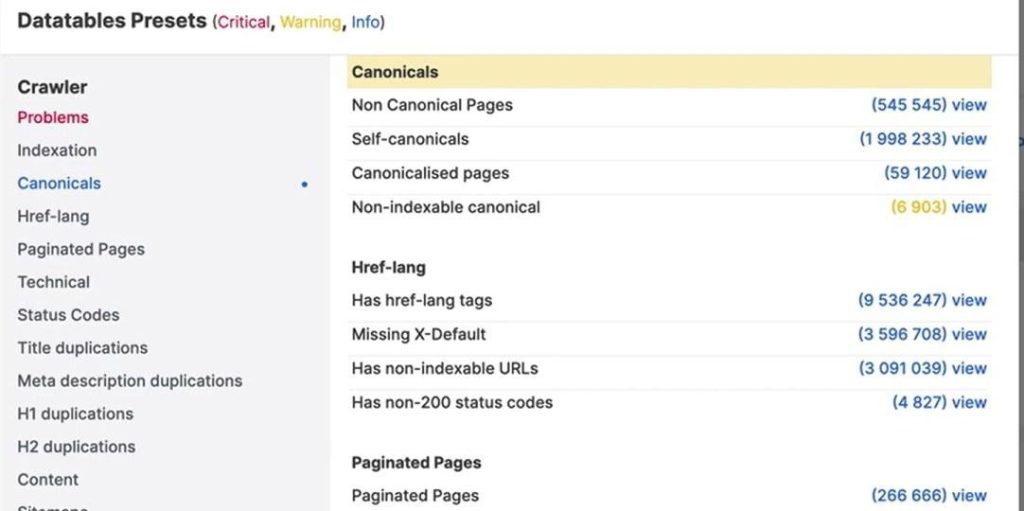
The Indexation section’s canonical tags report then breaks down every page’s canonical status (coverage, targets, conflicts and non-indexable destinations), so you can spot systemic issues (a filter template that isn’t self-canonicalizing, a paginated series pointing to conflicting targets) and fix them in the page architecture.
This consolidates signals, reduces URL surface area and channels crawl activity toward unique, revenue‑critical pages, improving indexation efficiency.
4. Ensure URL Parameters Aren’t Exposed to GSC
When you’re working on crawl budget optimization for big websites, like ecommerce, one of the biggest challenges is how filter logic, sorting options and tracking parameters can explode into thousands of near‑duplicate URLs. Parameterized URLs often represent the same underlying content, yet crawlers treat each variant as a separate request, multiplying crawl waste and diluting coverage across your canonical pages.
Thus, the solution is to avoid parameter URLs from being accessible, so you collapse this redundant URL space and force crawlers to focus on the versions that actually matter.
The most effective controls are site‑side:
- block truly useless parameter patterns in robots.txt
- canonicalize variants to the base URL
- keep parameter URLs out of sitemaps
- make sure that internal links always point to clean canonical URLs
That last point is where a lot of parameter leakage actually originates: templates, breadcrumbs and related-product modules that link to a filtered or tracked variant.
JetOctopus’s AI internal linker highlights underlinked pages by combining crawl data, log insights and GSC keywords, the last of which flags which pages are actually driving organic traffic.
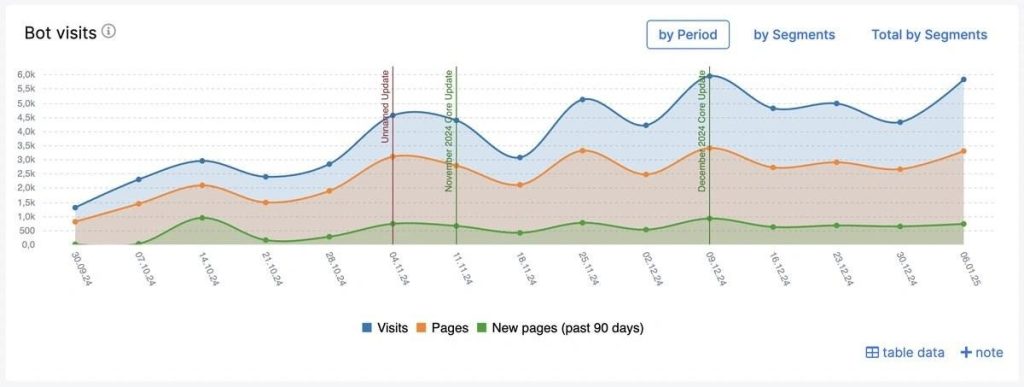
It then uses semantic analysis to connect those underlinked pages to high-performing ones with context-aware links. And through the Linker API, teams can detect opportunities, generate suggestions and apply changes in minutes, with live updates on both Googlebot and AI crawler navigation.
5. Fix Redirects and Broken Links
If you’ve ever pulled a crawl stats report and watched Googlebot or AI crawlers burn hundreds of requests on redirect chains and dead URLs instead of your actual PDPs, you know exactly what this costs you. Every redirect hop is another round trip; every broken link is a request that ends in nothing.
Multiply that across a catalog with a few thousand SKUs and seasonal delistings and you’ve got crawlers spending their budget on ghosts instead of your money pages.
A 3-hop chain simply multiplies that cost threefold. What’s worse is a resurgent 404/410 that keeps getting linked internally, a guarantee for Google to come back to check on it again and again, never converting that crawl activity into indexation.
JetOctopus makes this diagnosable: the Crawler Overview’s Status Codes chart shows your full 3xx/4xx breakdown at a glance, while the dedicated 3xx Pages report lists every redirecting URL so you can confirm it actually belongs there.
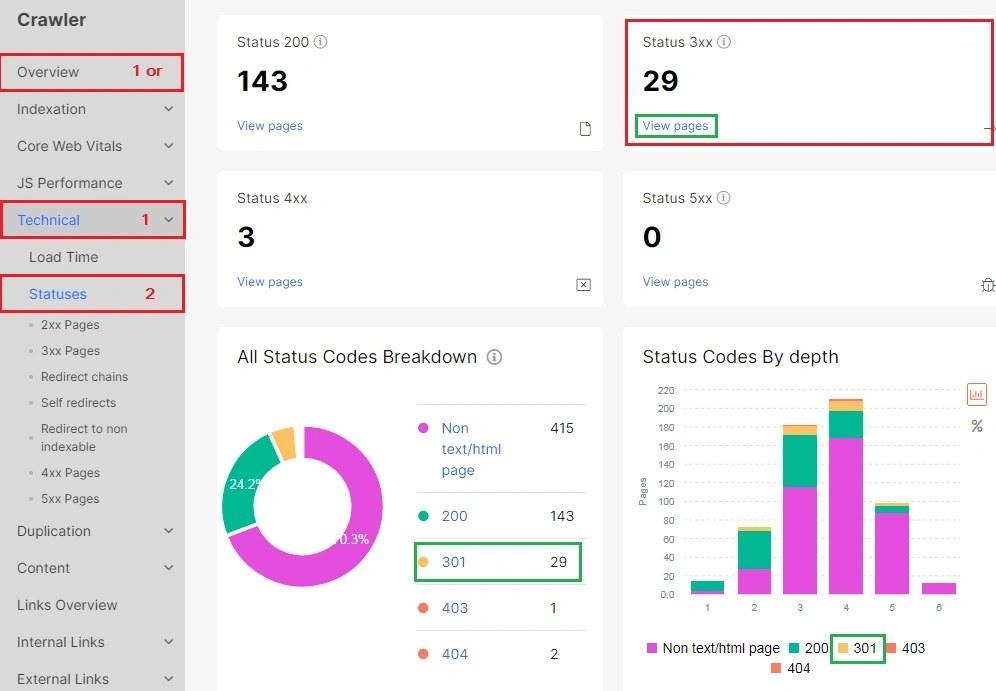
Since broken link counts drift between crawls, re-checking regularly (not just once) keeps the picture accurate. The fix is the same cleanup work you’ve done before, just applied consistently:
- collapse chains so links point straight to the final URL
- fix or strip out internal links that go nowhere
- standardize on one protocol/host so you’re not creating phantom duplicate paths
- use 410 (not a soft 404 or a redirect to the homepage) when something’s genuinely gone for good
Once that’s cleaned up, the change shows up fast in your logs: crawl requests shift toward category hubs and PDPs, recrawl frequency on your priority pages picks up and your internal link graph stops leaking equity into dead ends.
6. Manage Orphan Pages
Orphan pages are a real crawl budget issue on large sites because they sit outside the internal link graph yet still get discovered through sitemaps, backlinks or legacy references. When these pages offer little or no business value, they siphon crawl cycles away from high‑priority URLs.
Running a full crawl with JetOctopus allows you to see which pages on your site are genuinely orphaned.
The Sitemap report gives you a quick visual comparison of orphan pages against interlinked URLs, while the dedicated Orphan Pages report (filterable by source) lets you isolate orphans found specifically via sitemaps and GSC hands you the full, actionable list ready for prioritization.
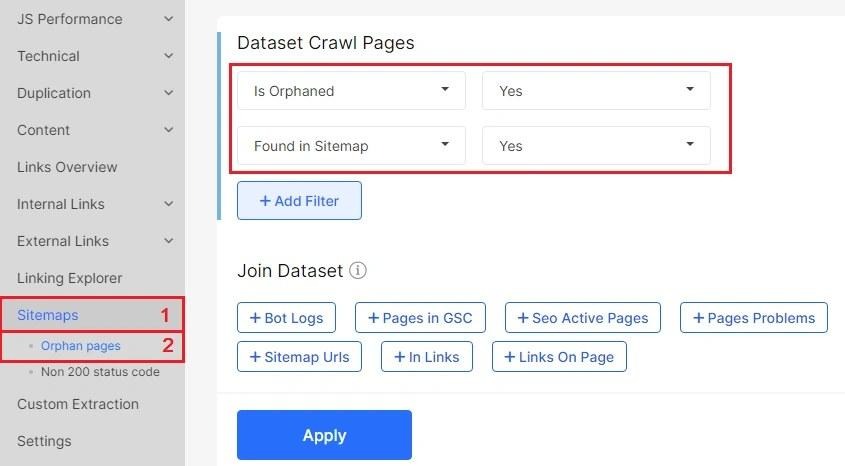
However, the optimization isn’t simply “delete all orphans”; it’s about resolving each one correctly. Our recommendations:
- Low‑value or obsolete orphans should be removed (see status code guidance above) rather than left to accumulate crawl hits.
- Pages with residual equity or traffic should be 301‑redirected to a relevant destination.
- Valuable pages should be reintegrated with strong internal links so they re‑enter the crawlable structure.
This targeted cleanup removes dead‑end URLs, sharpens crawl focus and powers up the overall site architecture.
7. Have a Clear Internal Linking Structure
When your site’s links create short, logical paths to high‑value pages, crawlers reach important content faster and spend less time trapped in low‑priority sections. Strong internal links signal page importance and distribute authority intentionally across your architecture.
Here’s exactly what strategic linking means:
- priority URLs sit close to the homepage
- use descriptive anchors
- keep links within coherent topic clusters
- reinforce URLs with breadcrumbs and clean navigation
Plus, to further improve efficiency, remove redundant links, fix broken ones and tighten faceted or paginated paths.
JetOctopus’s Links and Issues reports flag these high‑impact problems worth prioritizing:
- pages receiving fewer than 10 unique internal links from indexable pages (roughly the bare minimum for a page to be reliably re-crawled and ranked)
- links pointing to non-indexable pages or pages closed in robots.txt
- internal nofollow links quietly cutting off equity flow
The internal links and linking explorer reports break down exactly how many internal links each page has, making it easy to spot weakly linked or isolated pages sitting too far from the main structure.
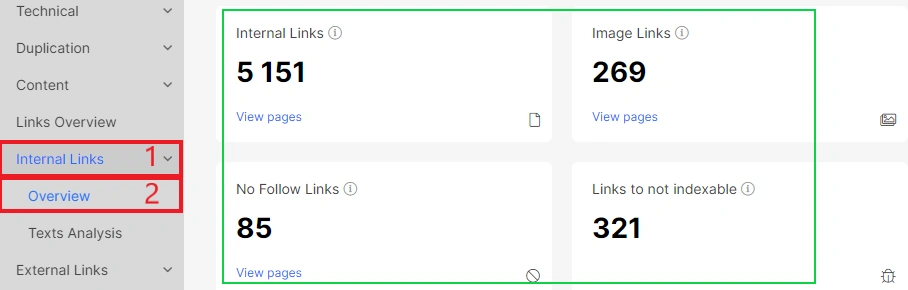
What separates this from a one-time audit is the ability to verify impact. Because JetOctopus can compare crawls over time, you can confirm whether a linking change actually improved indexability and crawl patterns.
The payoff is direct: better internal linking gives crawlers clearer paths to high-value pages, so more requests land on URLs that matter and fewer on dead ends. Stronger link architecture also speeds up discovery of new or updated pages.
8. Improve Site Speed
Slow servers, high TTFB and pages that regularly exceed 2 seconds to load force Googlebot to throttle its crawl rate to avoid overloading your infrastructure. Timeouts are even worse because every stalled request is a wasted crawl cycle that could have been spent on high‑value PDPs or category hubs.
This is where server performance and Core Web Vitals intersect directly with crawl budget. Googlebot’s crawl rate is partly a function of how quickly your server responds and how consistently it holds up under load; slow LCP, unstable CLS or sluggish INP signal that your site can’t absorb a higher crawl rate without degrading further.
Checking this page-by-page across a catalog with thousands of URLs isn’t practical, which is exactly the gap JetOctopus’s bulk CWV analysis closes: it pulls LCP, INP and CLS across large URL sets simultaneously via Google’s PageSpeed API, giving you lab data across your entire crawlable footprint in one pass.
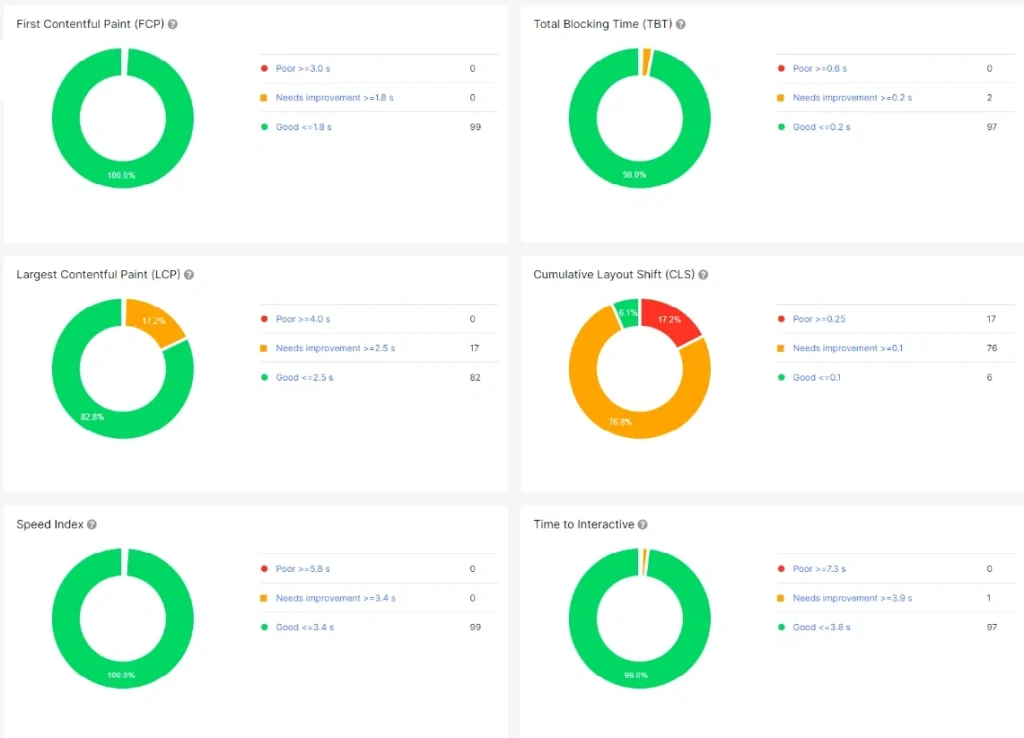
Connecting JetOctopus to Google Search Console to overlay real-user CrUX field data alongside lab results. This helps you distinguish a template that merely tests slow from one that’s genuinely straining your servers. Segmenting by folder or page type then isolates exactly which sections are dragging down performance, so you can kick off deeper PageSpeed analysis on just that filtered set rather than re-auditing the whole site.
Once you’ve pinpointed the underperforming groups, the fix is the same:
- sub‑200ms TTFB, aggressive server‑side caching
- CDN delivery
- minimized render‑blocking JS/CSS
- optimized images and HTTP/2/3
Because performance regressions creep in quietly, it’s worth setting automated CWV alerts so score drops get caught before they compound into ranking losses.
Final Thoughts
Crawl budget optimization isn’t a “nice‑to‑have” hygiene task for large sites. It’s a hard limit that dictates how efficiently your site gets crawled. Because every bloated sitemap entry, every muddled canonical is a tax on your crawl budget. And Google never pays that tax; you do.
When you run a large or fast‑changing site, crawl budget becomes a battlefield. Either you control how Googlebot spends its time, or you let it wander through dead ends and low‑value URLs while your high‑value pages sit in Discovered, not indexed purgatory. The difference between “indexed in 48 hours” and “indexed in 3 weeks” often comes down to whether you’ve made the small, relentless decisions that shape crawler behavior.
Those decisions are the grind as you get to keep your sitemap laser‑focused on URLs that deserve crawl priority, ensure canonicals resolve instantly and correctly, remove redirect chains, tighten robots.txt rules and build internal links that actually guide crawlers in the right direction.
This is the unsexy work that professional SEO teams do so they can actually win on indexation velocity.
The real gain is visibility: knowing what crawlers are doing right now, not what you assume they’re doing. When you can see crawl paths, wasted hits, ignored sections and indexation bottlenecks in one unified dataset, crawl budget stops being abstract and becomes a measurable, defensible advantage.
JetOctopus earns its place as a core, ongoing part of the workflow, offering a single platform and unified dataset that covers crawl‑budget optimization from start to finish. You get a single, consistent source of truth to run this maintenance on repeat and actually see whether it’s working.