In our last recap, we made three promises for 2026: Fan-Out Queries at scale, AI-powered page optimization, and AI Search Visibility. Six months in, none of those are plans anymore; they’re live and running inside the platform.
But that’s only part of the story. The first half of 2026 has been our most AI-heavy release cycle yet, alongside a stack of smaller upgrades that quietly change day-to-day SEO work. Here’s the full breakdown of what we shipped in H1 2026 and a clear look at where we’re heading in H2.
By the Numbers: JetOctopus Today
- 55,000+ websites crawled
- 23 billion pages analyzed
- 890 billion log lines processed
- 293 crawl charts, 90 log charts, 113 GSC charts
Founded in 2018, JetOctopus is a cloud-based, all-in-one SEO platform built for large websites and enterprise teams. We automate the heavy lifting in technical SEO so strategists can focus on decisions, not data-mining — combining a crawler, log analyzer, and GSC integration designed to handle SEO at scale.
We’re not just a crawler. JetOctopus is an all-in-one SEO and AI platform built for maximum data and insight with a minimum of spreadsheets and manual calculations, complemented by:
- Ultra-fast JS crawler
- GSC integration with extended analysis capabilities
- 360° real-time alerts across crawl, logs, GSC, Core Web Vitals and any combination of them
- Impact Hub — where data surfaces opportunities, not just numbers
- The ability to join datasets for limitless combinations
- AI analytics across the whole platform
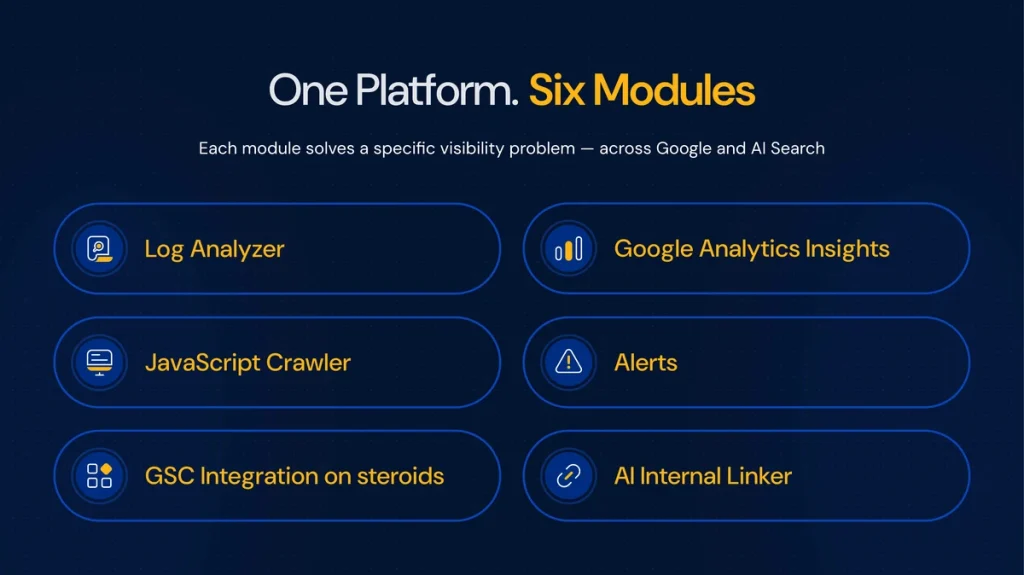
A single, integrated platform — built for scale, speed, and clarity.
A Quick Look at the H1 2026 Releases
Here’s the shortlist of the biggest things we shipped in the first half of 2026:
- JetOctopus MCP
- AI SEO Recommendations
- AI Page Optimizer
- AI Efficiency Dashboard
- Fan-Out Analyzer + Fan-Out Charts in GSC
- URL History Tool
H1 2026: Feature Deep Dives
JetOctopus MCP
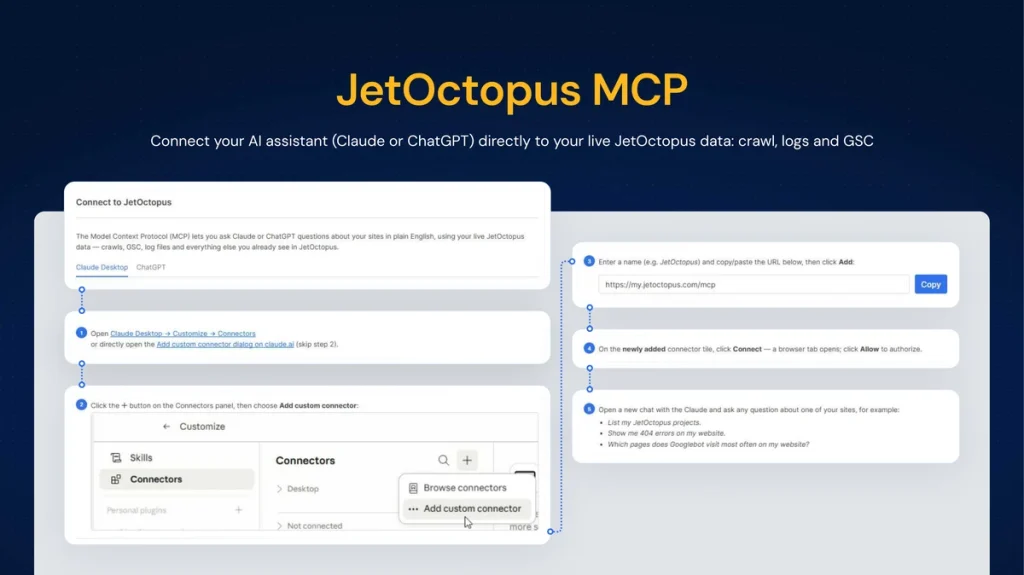
Our first big release of the year is the JetOctopus MCP server. It connects your AI assistant — Claude or ChatGPT — directly to your live JetOctopus data: crawl, logs, and GSC. So now you can ask, in plain language:
- “What page types are poorly crawled by AI bots, and what are the probable reasons?”
- “What are the most chronic technical issues dragging pages down in rankings?”
…or simply automate complex SEO reports spanning many websites at once.
But it goes far beyond Q&A. Directly from the chat you can start a crawl, pause it, resume it, adjust thread count or page limit, set a schedule, and archive finished crawls. Your saved Segments are available to the assistant too — say “take my Money Pages segment and show clicks and impressions from GSC” and you get one sentence instead of a manual filter chain. The MCP also exposes all your historical data, so you can compare crawls conversationally.
One important detail on safety: anything that spends quota or stops work, starting, cancelling, or deleting a schedule, triggers an impact preview first, and the assistant waits for your confirmation. Reversible actions like pause or archive run immediately.
This isn’t a chatbot layered on top of the dashboard. It’s the tool itself, made conversational.
AI SEO Recommendations
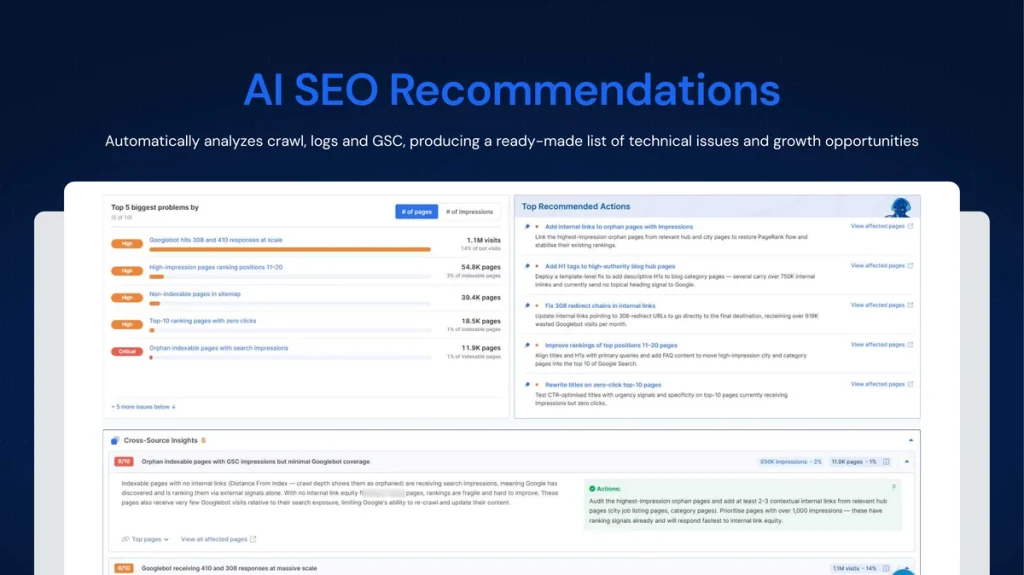
Our second major release is the AI SEO Recommender. It automatically analyzes your crawl, logs, and GSC, and produces a ready-made list of technical issues and growth opportunities, ranked either by the number of pages impacted or by the volume of organic impressions at stake.
What used to be hours of manual analysis is now done in a single pass by a dedicated AI model. You open the report and the priorities are already in front of you.
AI Page Optimizer
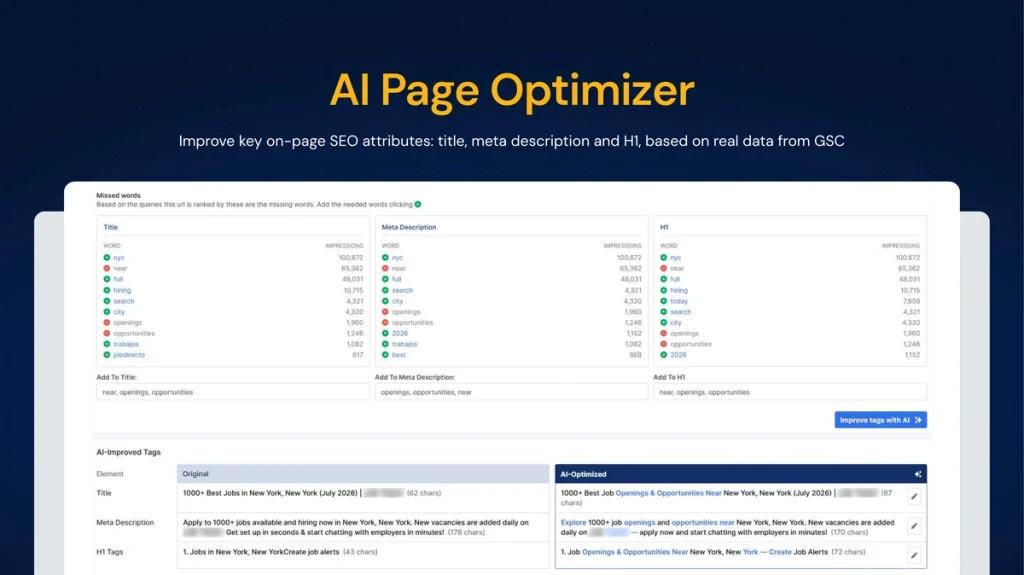
Next up: the AI Page Optimizer. It improves the most vital on-page SEO content — title, meta description, and H1, all based on real data from Google Search Console.
For any URL, you can see which keywords are generating impressions but are missing from your tags. With one click, you get an AI-optimized version shown side by side with the original, with character counts and highlighted changes. Let the AI rewrite your SEO tags, then upload them in bulk to your CMS when you’re done. The only thing left afterward is to watch your organic impressions and clicks grow.
AI Efficiency Dashboard
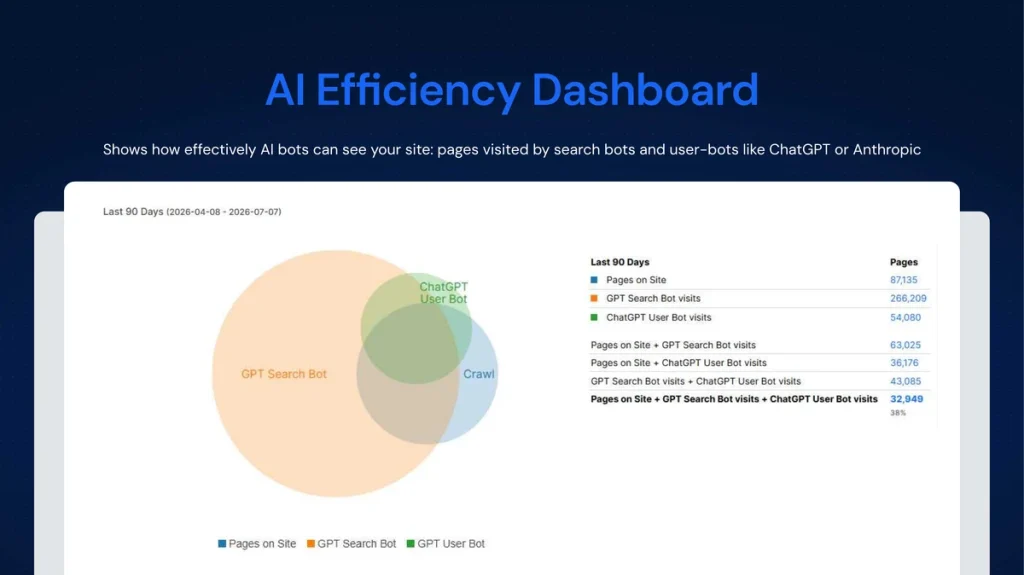
The AI Efficiency Dashboard is similar to the SEO Efficiency dashboard we’ve had for years, but this one shows how effectively AI bots can actually see your site: how many pages are visited by search bots and user-bots like ChatGPT or Anthropic. At a glance you can see:
- Which pages are invisible to AI bots
- Which pages were found but never shown to users
- What share of pages is invisible to AI because of 404s, redirects, or JS rendering
This isn’t just a report — it’s a map of exactly where you’re losing visibility in AI search.
Fan-Out Analyzer + Fan-Out Charts in GSC
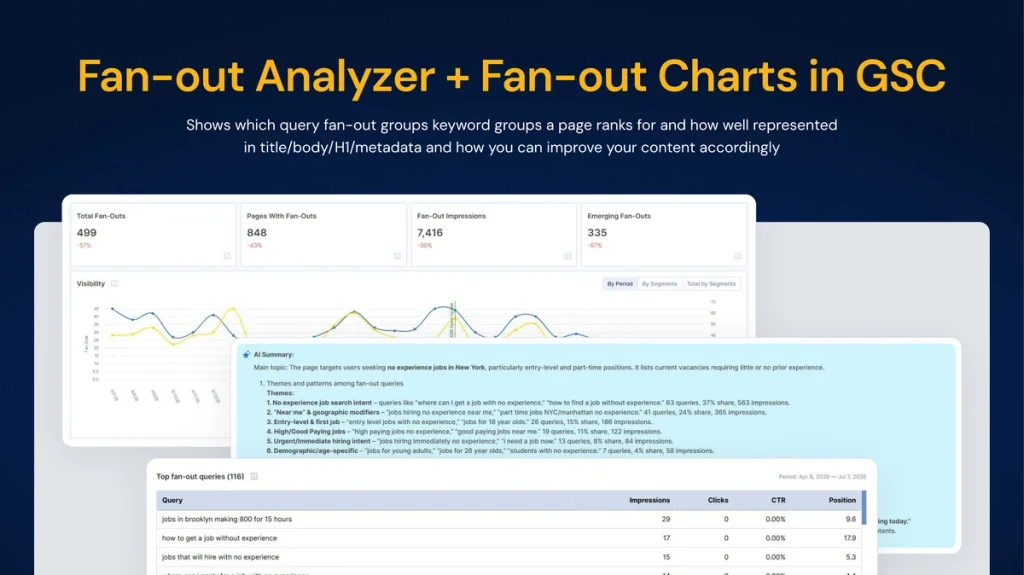
When a user asks a question in ChatGPT or another AI tool, the model doesn’t search for that exact phrase. It breaks the query into smaller sub-queries, fan-out queries, and searches for each one separately. We shipped two tools that work together to make this visible.
The first is the Fan-Out Analyzer: it shows which fan-out keyword groups a specific page ranks for, and how well those terms are represented in the title, body, H1, and metadata. The second is fan-out keyword charts directly inside the GSC report, so you can track the trend over time.
Together, these deliver the Fan-Out Queries at scale we promised in the last recap, now covering the entire site, not one page at a time.
URL History Tool
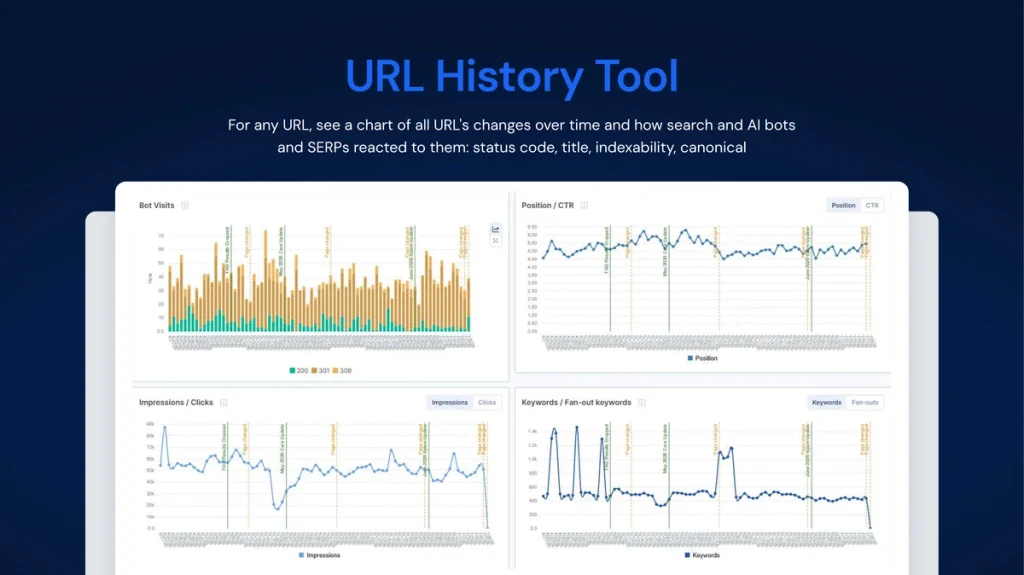
The last big release is the URL History Tool. For any URL, you can now see a chart of all its changes over time: status code, title, indexability, canonical. This finally closes the classic question — “when exactly did this page break?” No more manual crawl comparisons. The full history is right there in front of you, and you can see how search bots, AI bots, and SERPs reacted to each change.
Smaller Releases — Still Genuinely Useful
Alongside the headline features, we shipped a set of smaller-but-meaningful upgrades this half:
- My Data got a refreshed interface and improved functionality.
- Alerts can now be connected directly to Microsoft Teams.
- Summary Data Tables now show inline mini-charts — you see the trend without leaving the table.
- Alert Schedule for your most important URLs enables automatic, ongoing monitoring.
- Pre-crawl Firewall Check verifies your site is accessible before a crawl starts, so you don’t burn quota on a blocked site.
- Compare Crawls now compares crawl settings too, not just data.
- Breadcrumbs now automatically validate status codes for every URL in the chain.
- The Fakebots report got sharper and easier to work with.
Plans for H2 2026
We’re going to push the boundaries of AI even further — it’s one of our top priorities for the rest of the year. In H2, we’ll continue AI-empowering the core of the platform:
- GSC and GA4 integration updates
- Internal linking tool enhancements
- Anchors analytics
- Content optimization functionality
These won’t just have AI sprinkled on top. The experience we ship over the next six months will be 100% AI-first. Our goal is to reach and automate as much of the SEO process as possible and to exceed the wildest expectations of what a technical SEO platform can do.
And of course, as we grow and evolve in the AI era, we’ll keep investing in customer experience, not only by improving online support, but by sharing the SEO and AI knowledge we’ve gathered from working at Big Data scale.
Ready to see how these updates work for your site specifically? Book a free demo and we’ll walk you through the platform, show you the features most relevant to your project, and help you find quick wins right away.
See you in the next recap!